The big key-change change
There's a noticeable absence at the 67th Eurovision Song Contest - the key change! We investigate the sharp decline of the popular song-composition element in recent years, and reminisce about some of the best examples from Contests past.

The Eurovision Song Contest 2023 has 37 tunes competing for the trophy in Liverpool. But that beloved pop gimmick of so many Eurovision classics - the almighty key-change - does not appear in any of them!
It's the first time in the Contest's 67-year history that this has happened (although we're still trawling through the earlier-Contest archive to fact-check and confirm).
The missing-in-action key-change has seen its fortunes plummet at the Eurovision Song Contest in recent years. 2023's no-show is in stark contrast to just 10 years ago - when the 2013 Contest in Malmö had 13 of its 39 competing entries feature a key change.
That 2013 Contest a decade ago saw 3 key-changes occupy the Top 5 of the Grand Final scoreboard, with Azerbaijan, Ukraine and Russia bewitching voters with the marvellous modulation featured in their entries.
Fast-forward to 5 years later, and the 2018 Contest in Lisbon had just 3 songs with key changes feature in its entire lineup of 43 participants. And on the night of the Grand Final, only one of them graced the Top 10 on the scoreboard - Higher Ground by Rasmussen for Denmark.
Last year, at the 2022 Eurovision Song Contest in Turin, it was again Denmark that was still valiantly representing the key change at the Contest - alongside their Nordic neighbours Finland.
But this year, in 2023, even the Danes have dropped the tuning up of the tonality, and the key change finds itself unrepresented in Liverpool.
We have to go back to the 2007 Eurovision Song Contest to find the last time a Contest winner featured a key change. In Helsinki, Molitva was performed by Marija Šerifović, and earned Serbia the trophy on its very first time competing at the Contest as an independent nation. The ballad, perhaps foreseeing the key-change drought that was to come, actually shoe-horned in more than one key change for us to swoon over.
Many viewers of the Eurovision Song Contest might understandably be bereft at the lack of key changes among the lineup of the 2023 show in Liverpool. With that in mind, we’ve gathered together 5 of the best we've had at the Eurovision Song Contest - for a tuneful trip down memory lane.
A trip that switches gear for the final 40 seconds, of course...
Jade Ewen - It's My Time (United Kingdom, 2009)
The build-up, the strings, and the camera pan to Andrew Lloyd-Webber looking very pleased with himself. As he should, with that Top 5 finish!
Angelica Agurbash - Love Me Tonight (Belarus, 2005)
In this song, it wasn't just the key that went through a jaw-dropping shift. Our Ang' also treated Contest viewers to multiple costume changes, too. Eurovision stereotypes were truly enforced during those three minutes.
Charlotte Perrelli - Hero (Sweden, 2008)
"Taking the fight is the life of a hero", and we salute the hero that is Charlotte Perrelli, after gifting us with not one, but two entries with key changes over the years.
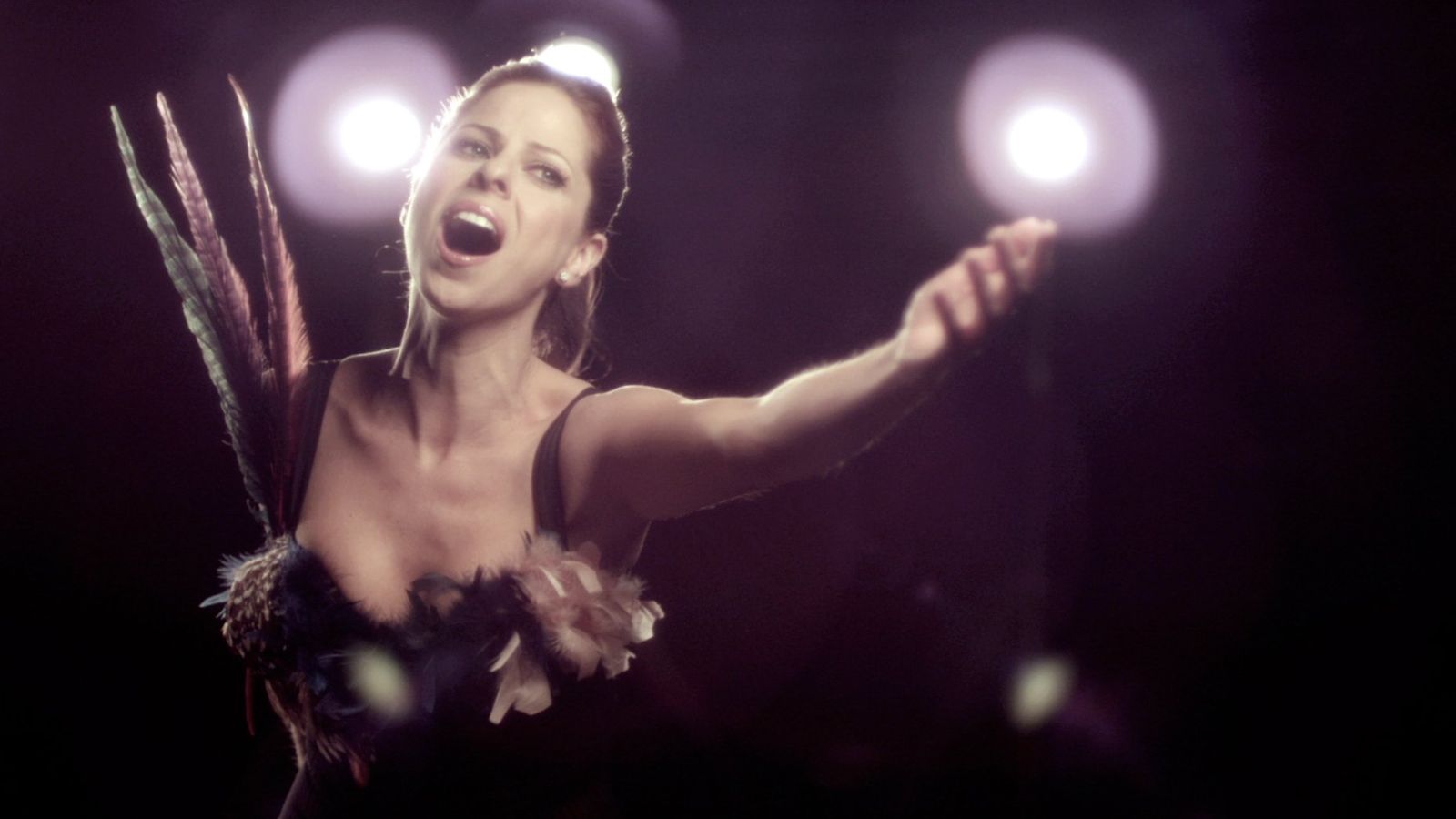
Pastora Soler - Quédate Conmigo (Spain 2012)
Fun fact: In 2012, the owners of Baku's newly-constructed Crystal Hall very nearly had to invoice Spanish broadcaster RTVE for damages done to the arena by the key change in this song, which fell just short of literally blowing off the roof. True story, everyone knows it!
Valentina Monetta - Crisalide (Vola) (San Marino, 2013)
Going from one key to another is one thing, but doing so while simultaneously increasing the tempo of your song from ballad to banger, AND looking resplendent in an outfit reveal - Valentina emerged from this chrysalis glowing.


_kbjlrum-fill_size%3d832x1040-focal_point%3d696x732-focal_size%3d1015x1125-fill_size%3d832x1040-focal_point%3d696x732-focal_size%3d1015x1125.jpg)