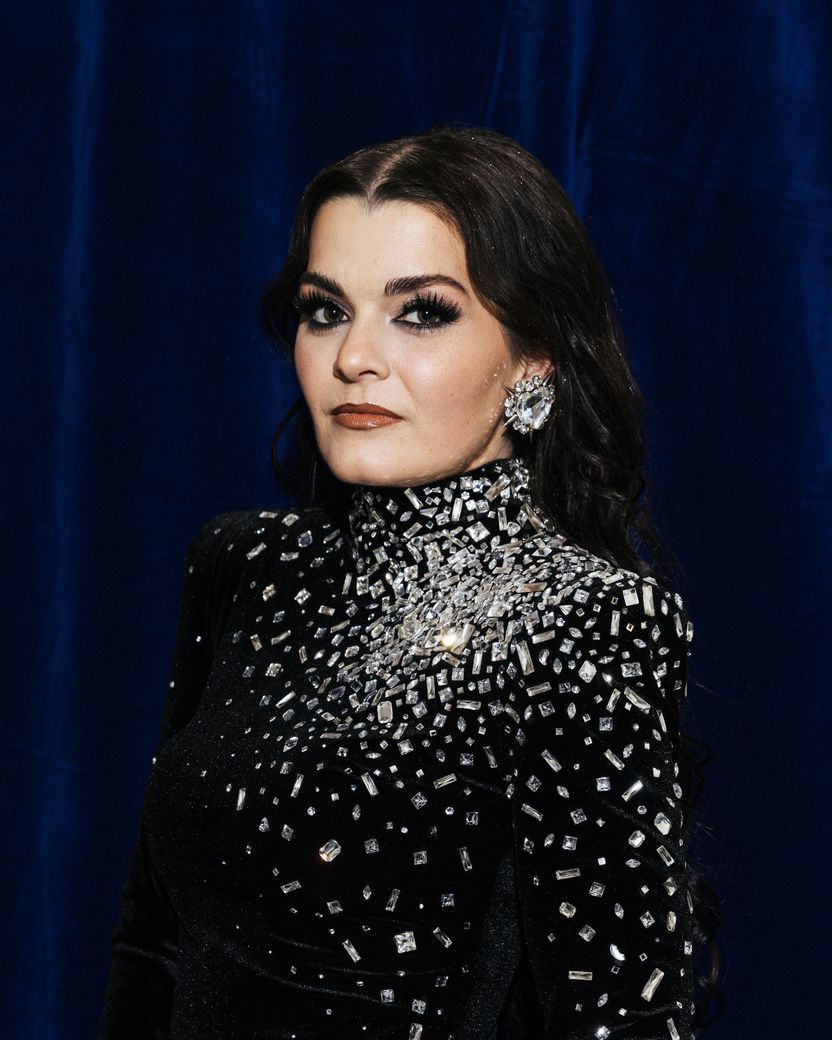
Backstage at Eurovision: Discover the magic of show day
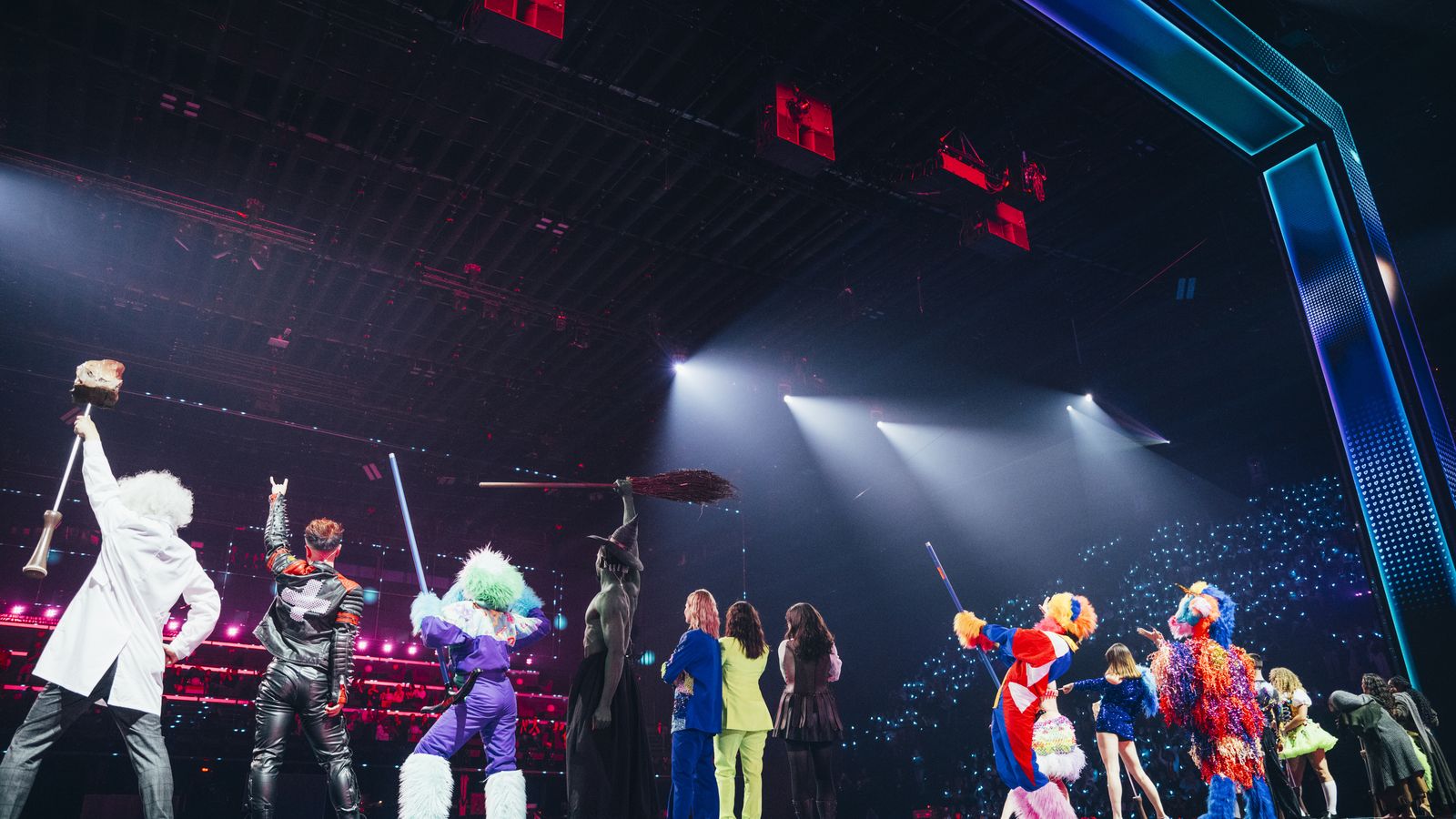
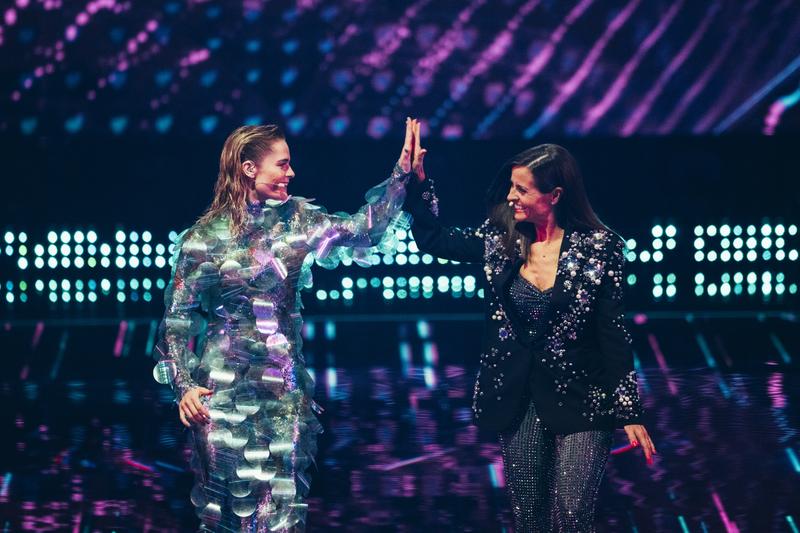
Hazel Brugger and Sandra Studer (plus special guest Petra Mede) perform interval act Made in Switzerland at the First Semi-Final of the 69th Eurovision Song Contest at St. Jakobshalle in Basel
Behind each live Eurovision broadcast, a huge crew of people work hard to make everything go smoothly. Come with us backstage, to get a glimpse into what happens on show day.
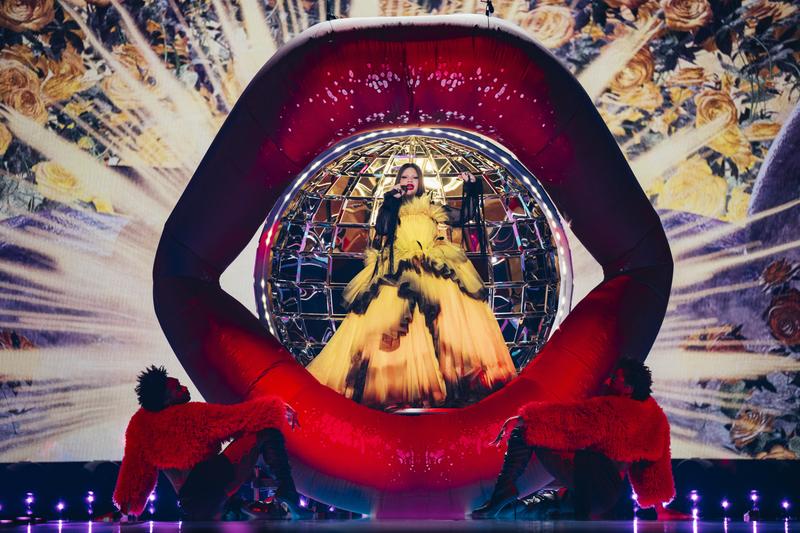
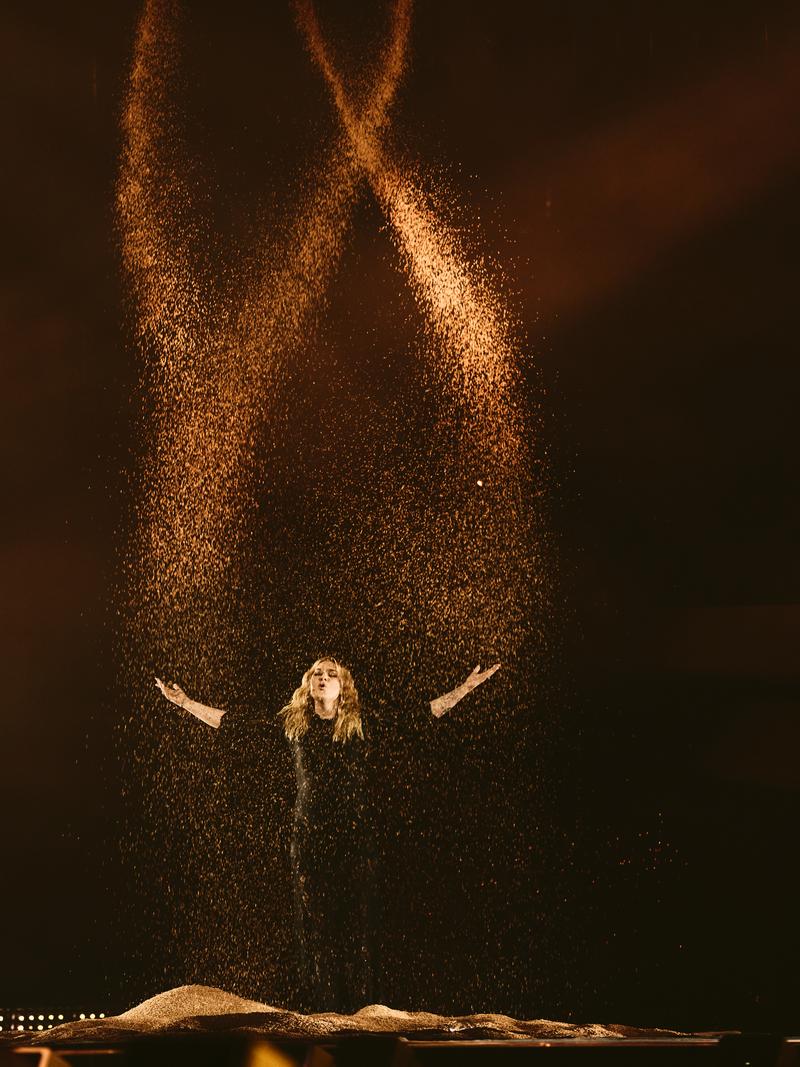
A giant chandelier. A human-size disco ball. A sand-sprinkling machine. It’s the afternoon before the Eurovision 2025 Second Semi-Final, and some of the show’s biggest props are queued up in the store, ready for some TLC from the backstage team.
Erika Vikman’s golden microphone is in two halves. The pyrotechnics team are working on the base, resetting the effects for another explosive climax to Finland’s performance. The rest of the mic is about to be checked by Eurovision Props Manager Sophie Zimmermann.
She looks it over between every show for scuffs or damage – it does, after all, have to fly through the air, be walked across in high heels, and be wheeled off the stage in next to no time. That’s a lot for one prop to experience.
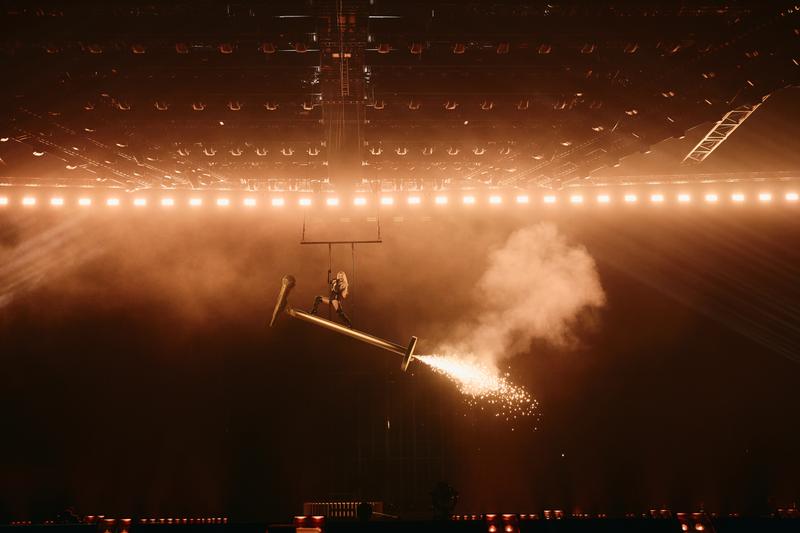
“I’ve been test flying all of these,” Sophie says, showing us the rig points where Erika is attached to the microphone. We just about resist asking to have a go.
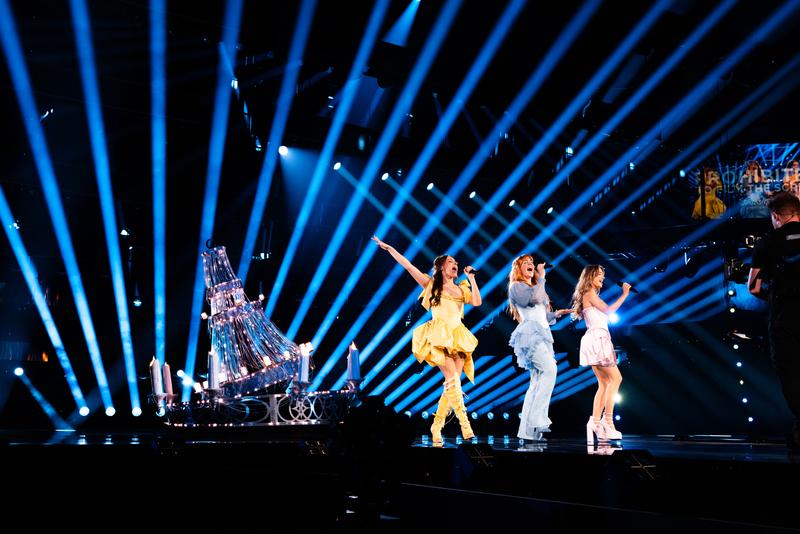
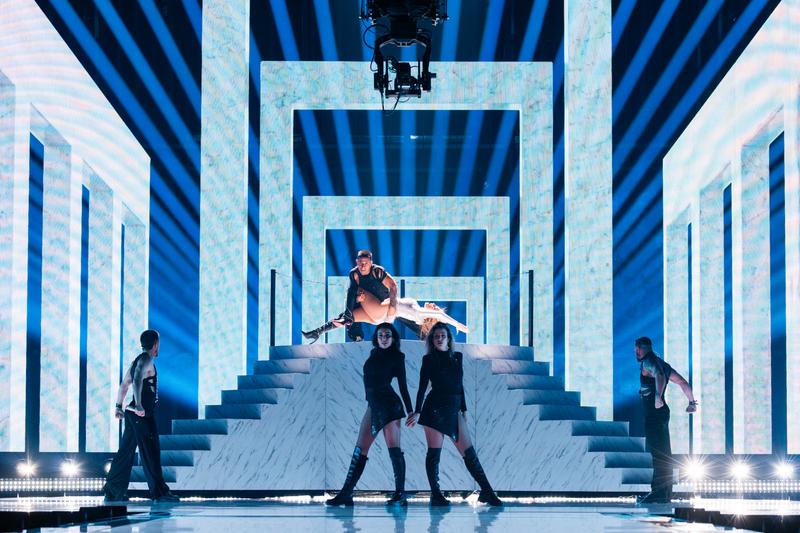
When she gives us a tour around the props store, she’s just finished resetting Latvia’s curtain, which gets tangled during the quick change. There’s a similar story for the UK’s chandelier and Israel’s staircase. Both use strings of beads, which need a lot of maintenance. The chandelier has to be polished to keep those beads sparkly, and each string taken off and reattached between each performance.
Other props need more attention when they don’t work as planned during a rehearsal, and she’ll also perform quick fixes, like putting in extra steps for performers, and making everything look a bit slicker with skirting to hide wheels.
“Only in the rehearsals, you find out what breaks,” she says. “A big learning curve for me was, as I come from mainly theatre and concerts, the durability and the strength that the props need to have here, because it needs to be rigged on and off so quickly.”
The Stage Manager works hard during show days to keep all the quick changes slick, and Sophie builds and maintains the props to make sure that can happen. She’s on hand during the shows too. She spent the Second Semi-Final cooking the fondue that Hazel and Erika shared in the Green Room. After she’s finished showing us around, the next job on her list is to paint a sausage for Sweden.
Once a show’s over, Sophie and the team are hard at work making repairs. She’s joined day and night by 4 helpers, or “angels” as she introduces them. If something needs a lot of curing time, there’s no time to waste, and they’ll keep working into the early hours of the next morning.
For Sophie and her team, most of the hard work comes in the months and weeks leading up to the live show days.
The same is true for Christer Björkman, Eurovision’s Head of Contest, whose show days start with fixing problems. Every live show day comes with two performances, the first of which is a rehearsal with an audience, and the second being the real deal, broadcast live to millions of people around the world. There are also two rehearsals the day before.
When Christer gets in on the morning of a live show day, he and his team start by going through notes from each participating country. They work out what changes need to be made, and send that information to different departments. It could be the people who oversee smoke, pyro, camera shots, or lighting.
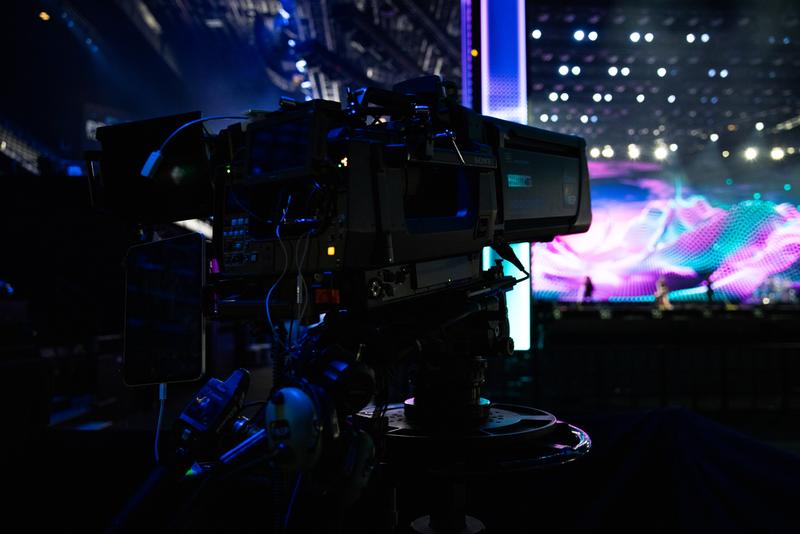
“It's big things, but it’s also really, really small things, like the framing of a shot,” Christer explains. Everything is scrutinised, and has to work in sync.
When the live broadcast goes out during the Semi-Finals and Grand Final, Christer’s team is spread around the arena, while he’s in the OB (outside broadcast) van. One checks the broadcast sound and picture in the viewing room, with delegations. Another monitors the stage from the Green Room. And one meets each artist as they come off stage, confirming that everything went to plan with their in-ear monitors. They each send through an “OK” to Christer.
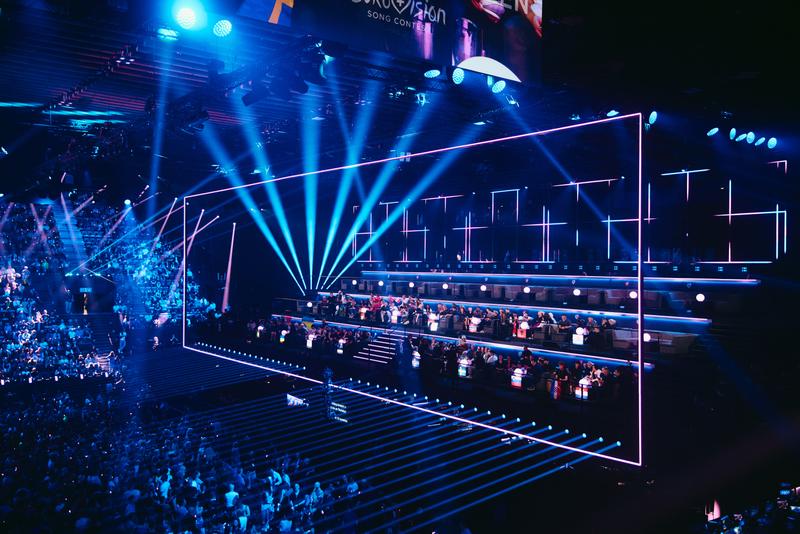
“And when I have ‘OK’ from each and every department, I then push the button to the EBU, and I sign off. That happens throughout the Contest, and in the Final it's 26 times. If we're lucky, it's an OK from everyone,” Christer says.
On show days, anything can happen. “We could lose LED, lighting trusses can get stuck."
In the First Semi-Final, one of these challenges came up, when two of the cameras stopped working. It was down to the camera director to improvise, and replace the shots with other cameras.
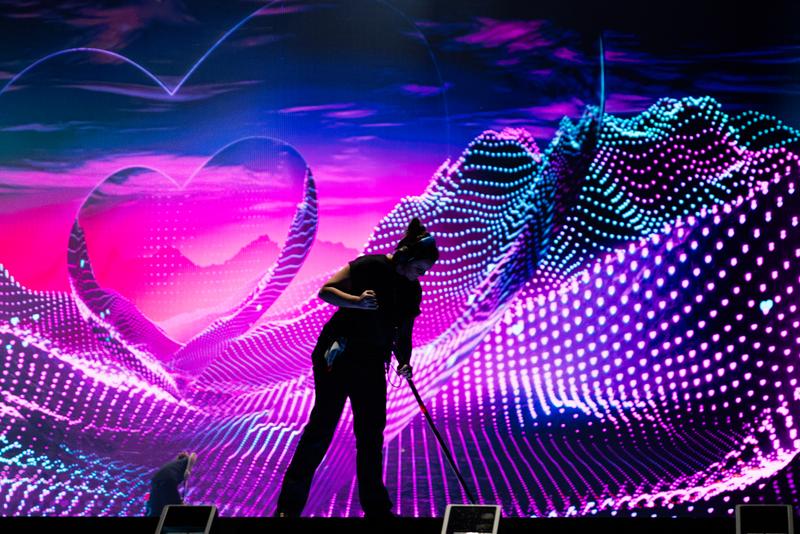
In Christer’s mind, the backstage people who have the toughest show day job are the stage crew.
“They reset that stage in 45 seconds, which is a postcard. And that's all they have. They bring on enormous props. And then they have to get them off and get the next one in and get it ready in no time. They are the true heroes of this show, really,” he says.
“It's almost like a choreography back there. They swirl out, they swirl in. And somewhere in that area are also our stage directors with an artist or several artists that they have to sneak in.”
Choreography is the perfect word. When a microphone stand or yoga ball suddenly appears on stage, it’s been snuck in when the camera isn’t looking.
Working closely with Christer is Yves Schifferle, Executive Head of Show. Yves oversees the framework of the shows, sprinkling Swiss-ness through the narrative, in everything except the competing songs. 2025 is his first year doing the job at Eurovision.
“What is super special in comparison to other productions, is that you actually do 12 shows in one week. Three of them are aired. Nine of them are with an audience,” he says. “Show day is usually, if you're well prepared, the least hectic day.”
The major changes come between the second dress rehearsal (the night before show day) and the third dress rehearsal (on the afternoon before the live broadcast).
“Then you really have to go into the broadcast very, very focused to make sure that those changes work and they run smoothly,” he says.
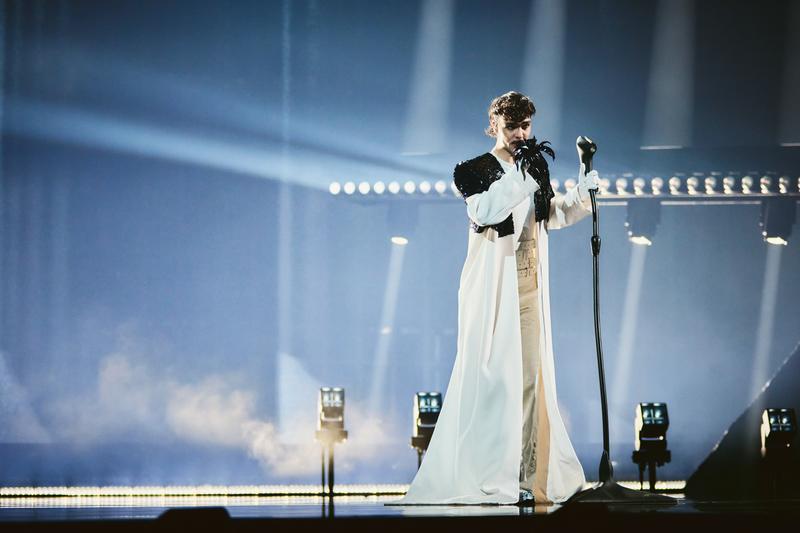
There’s one absolutely essential component of Eurovision, and that’s the competing artists. Ahmad Halloun from Czechia's delegation told us what it was like backstage for ADONXS at the Second Semi-Final.
“We've been working tirelessly for 6 months to do this. So, everything comes down to these two days of performances,” he says.
When they get to the arena, the tension starts building. ADONXS starts his day with an interview with Czech TV, before having lunch. Everyone gets into hair and makeup, and ADONXS has to wear gloves over his gloves, to protect the white from getting smudged with makeup.
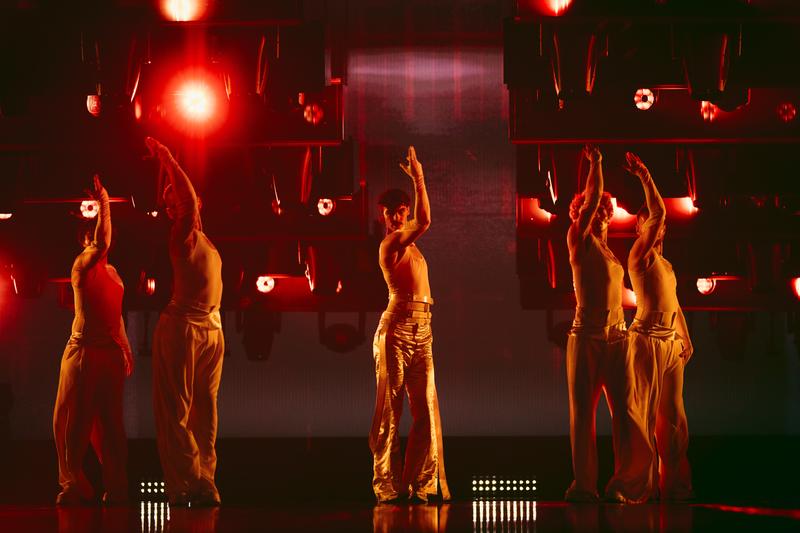
With showtime nearing, he starts his vocal warm ups and has a ginger shot. And then, when it’s time to go, the backstage volunteer knocks on their door, and they hear: “Czechia, 10 minutes!”
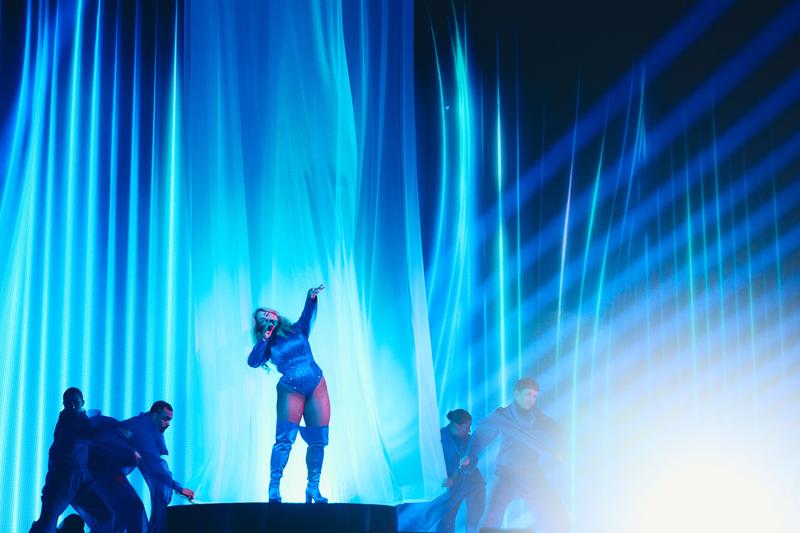
Meanwhile, other artists and their teams mingle in the delegation bubble throughout the day. A huge Moroccan Oil salon stands in the middle, where performers and dancers have their hairstyles created before they hit the stage.
We've spotted Katarsis from Lithuania, VÆB from Iceland, and Abor from Germany playing Mario Kart, Azerbaijan’s dancers perfecting their moves with their choreographer, and Justyna from Poland warming up her vocals from her dressing room.
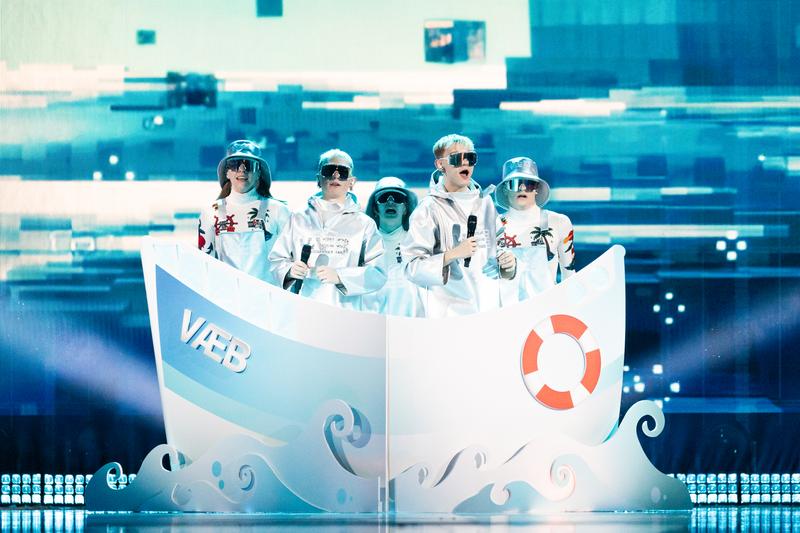
When the show gets going, anyone who’s not on stage gathers around a big screen to watch together. Iceland’s head of delegation cheers after one of VÆB’s rehearsals: “That was so good, wasn’t it?!” while on another day Beatriçe’s mum sings and dances along to Albania’s performance.
While the fake results are handed out during rehearsal shows, performers who are early in the line-up are back in hair and makeup, ready to go again.
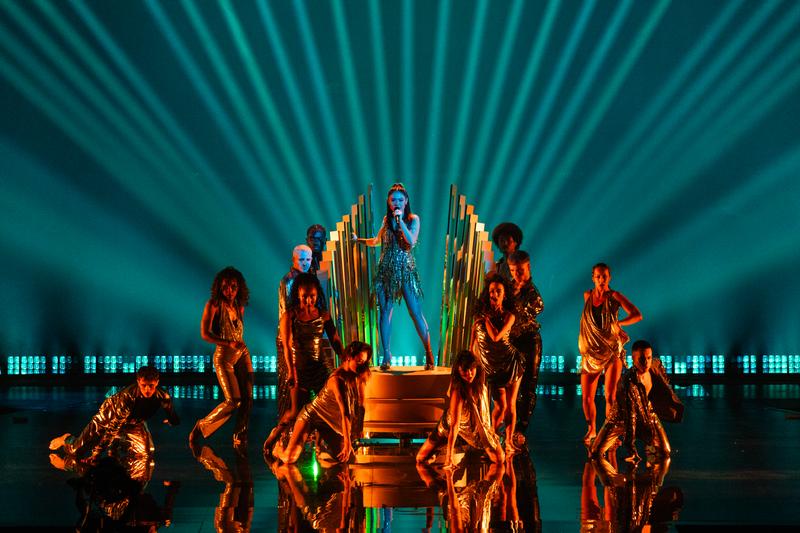
Down a maze of corridors, another team works round the clock on show days – the hair and makeup team who create the looks for all the opening and interval acts. Joshua Leuthold is the Hair and Makeup Coordinator, and showed us what happens backstage on show day.
The work gets started around three hours before the afternoon rehearsal, and even once the show has started, they’re still working hard.
“Every look has to be buildable,” he explains.
Dancers perform in more than one act, meaning their look needs to be switched up mid-show – some of the quick changes are only 7 minutes long. When changes are that speedy, the makeup is done backstage.
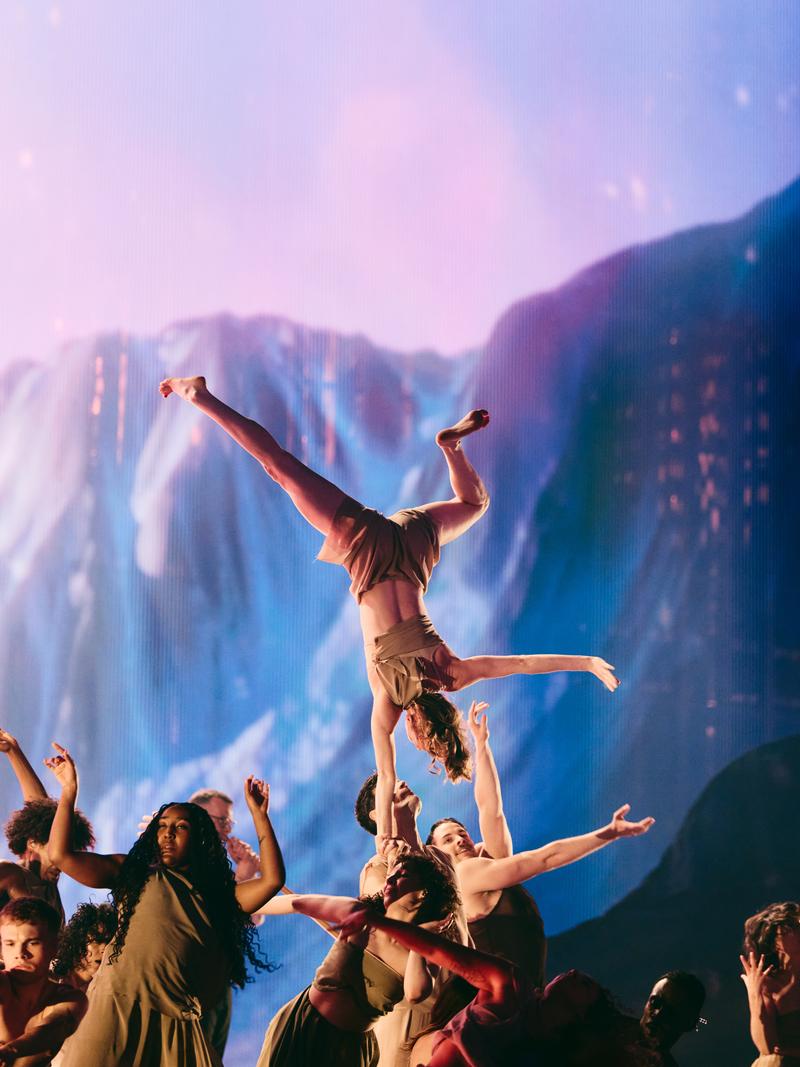
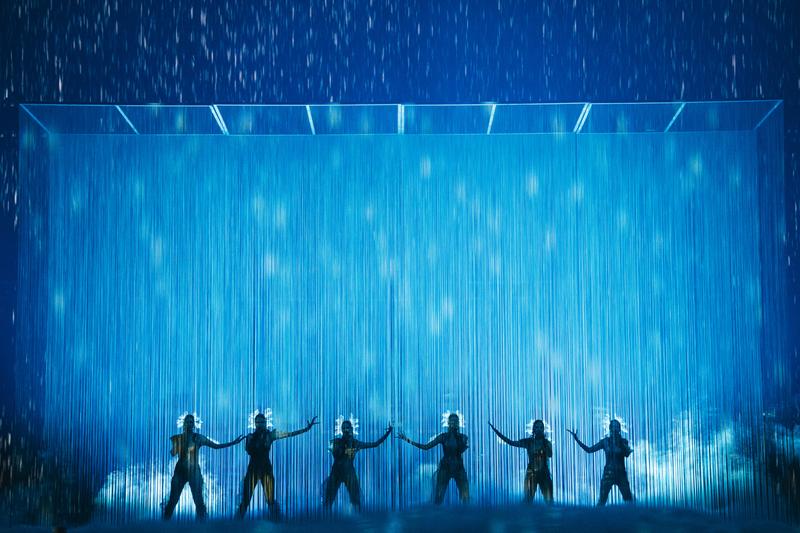
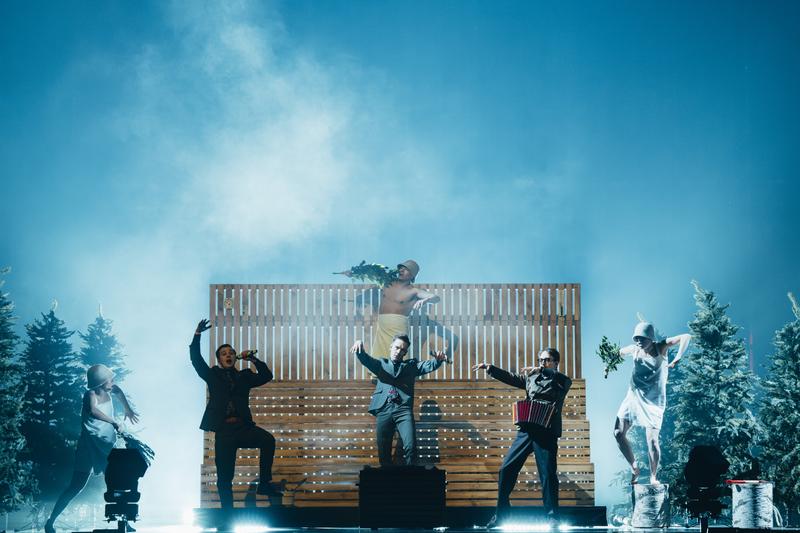
They’re often making up huge numbers of people – Raw Nature in the First Semi-Final involved 45 people on stage.
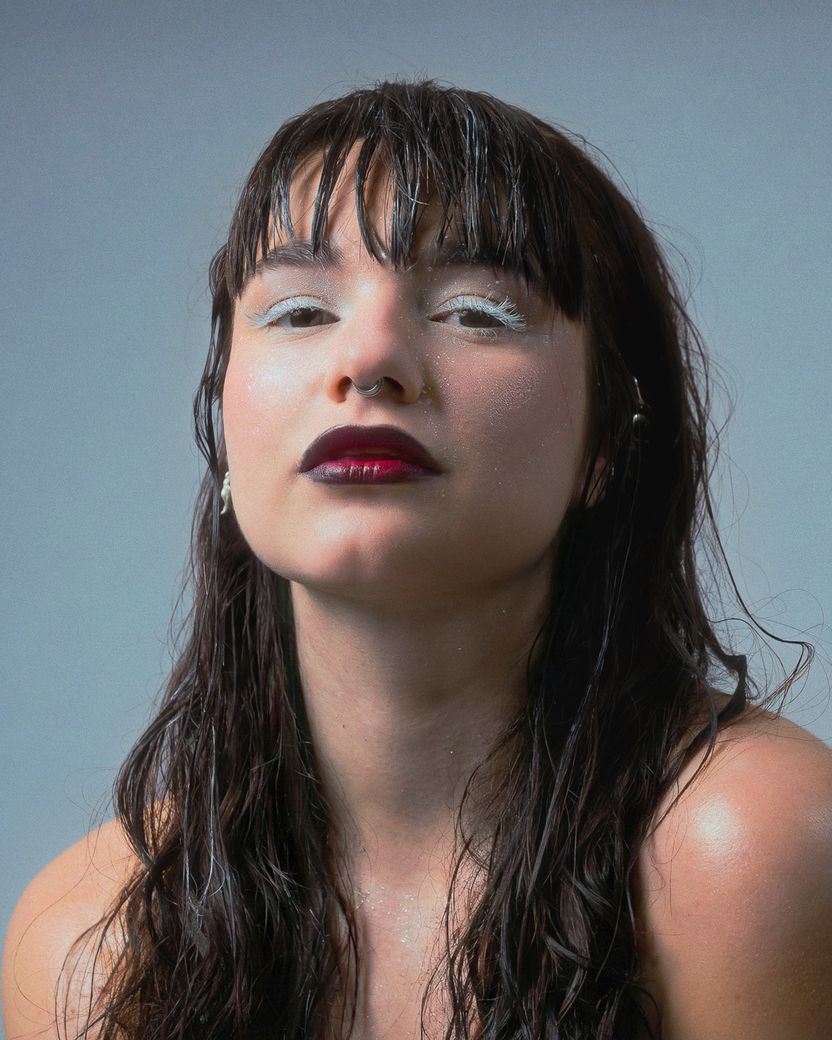
“We all loved Raw Nature, with this wet look where everything was really moist and glowy and natural, and embracing diversity from each of the dancers,” Joshua says.
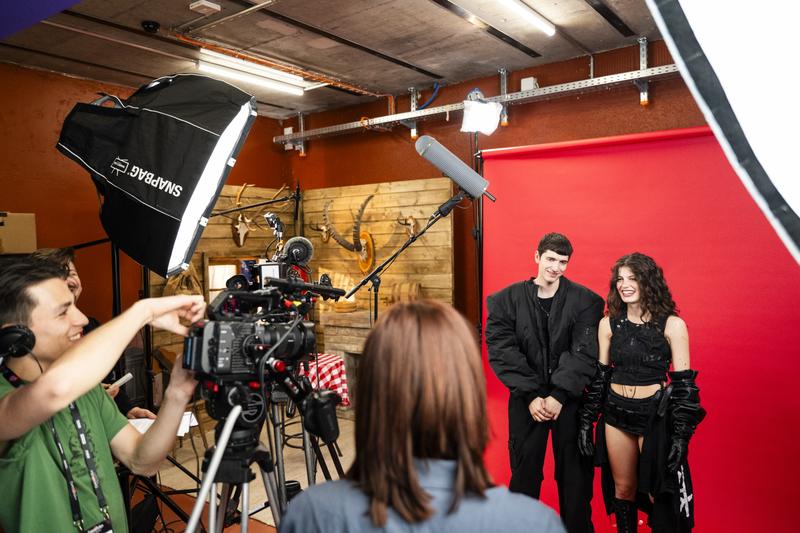
As well as the live broadcast, the magic of the shows is captured by the Eurovision photography team – a tight (and mighty) group of just three people. They photograph during some of the rehearsals and during the live show itself, and spend the rest of their time editing, or welcoming artists into their studio. They can often be seen running from their stations in the auditorium, ready to get edits made as quickly as possible.
“The delegations have spent months and months putting a lot of effort into their performances, and we want to do them justice,” explains Head of Photography, Corinne Cumming.
When the lights come up on the Green Room and the votes start coming in, the photographers are ready for reaction shots.
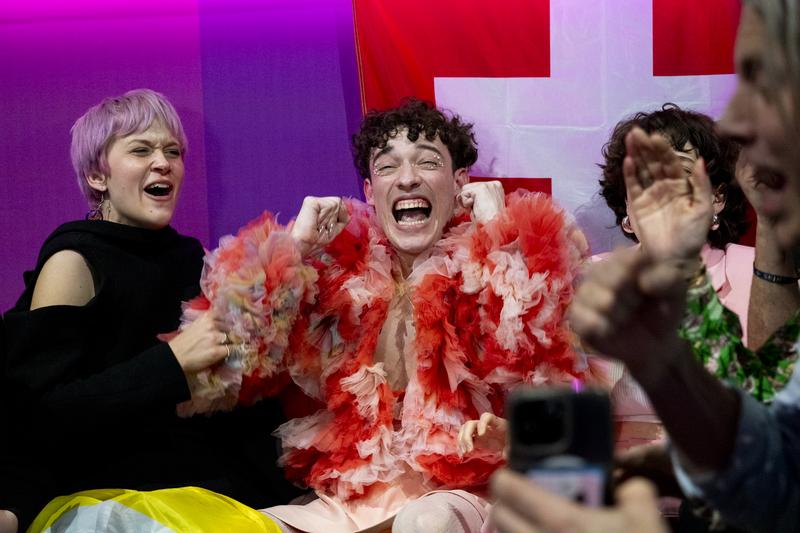
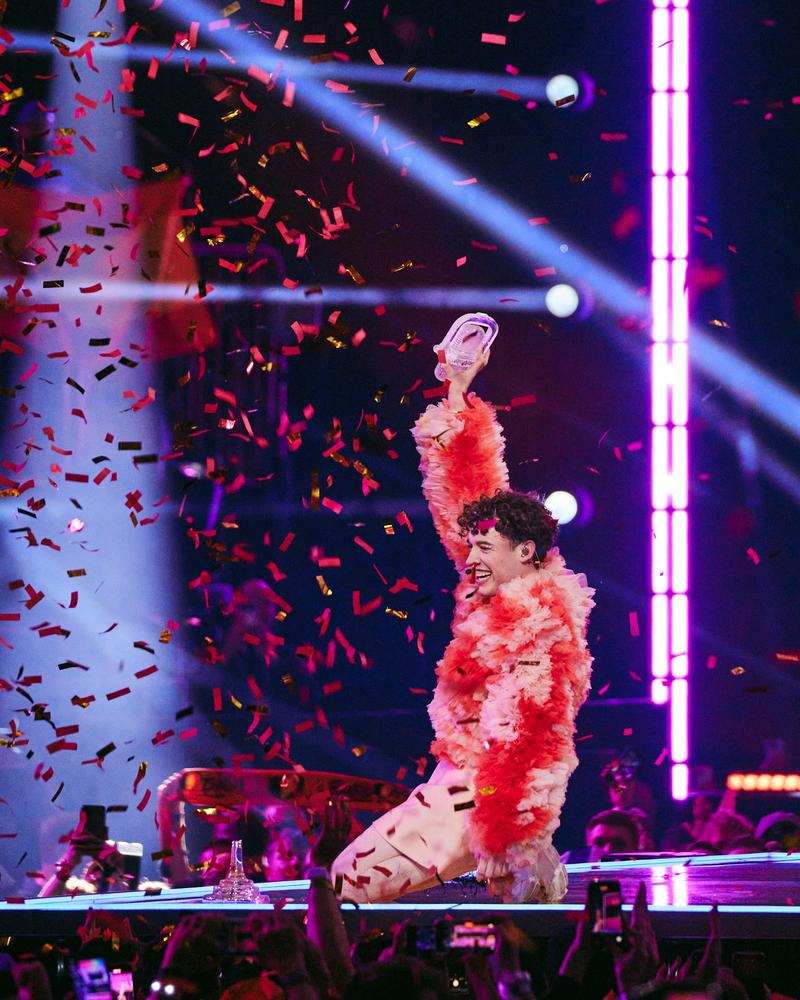
“When it's getting down to the final two, we have a photographer on each person, and then obviously when that gets announced, we have the photos of them winning,” Corinne says.
Before long, she’ll be up on stage, ready to take the all-important winner’s photo. Then she’s sprinting through the arena again, ready to get the portrait edited and published.
In the 2025 live shows, the photography team are on stage during one of the competing songs for the first time. Switzerland’s artist Zoë Më has a lot of camera crew close to her on stage, which made capturing good photographs extra tricky.
“When there's an audience in there, it's pretty much impossible for us to get the variety of the pictures,” says photographer Alma Bengtsson.
Alma was explaining the problem to some of the Steadicam operators. And before she knew it, she’d been invited on stage with them.
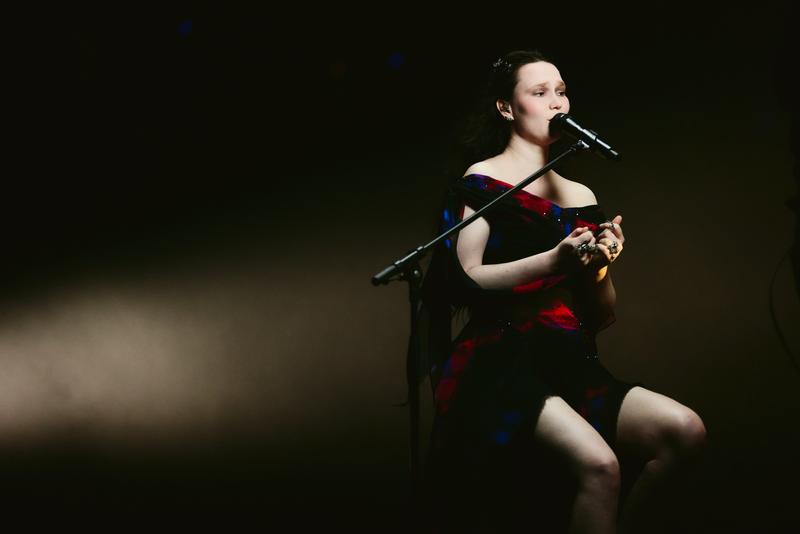
“They all go up from the side of the stage, so I'm just in the pit waiting for them to go up. I'll go up last, and then I stand next to the guy holding the camera cable,” she says.
She’s watched the camera movements (the choreography that Christer described) and after several rehearsals knows how to move with the team.
“The first time I did it, the adrenaline, it was crazy,” she says. “It's weird as well, because I'm used to being in the pit, beside the stage, in the darkness.”
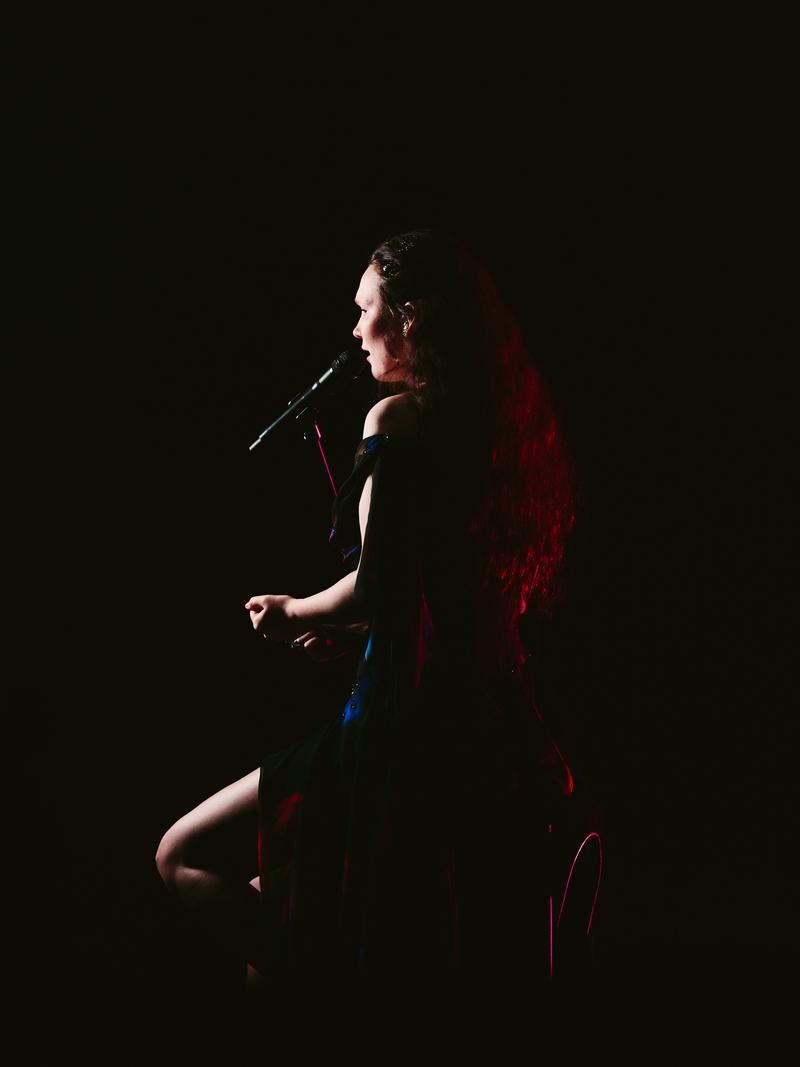
The lights go down at the end of the song, and Alma scurries off to edit the pictures.
It takes hundreds of people to make Eurovision work. As Christer says: “You cannot really emphasise enough how complicated it is and that all these people, we're talking hundreds of people, have to do the right thing at the same time for hours.”
What’s absolutely clear is that people backstage love doing this, and they want to do the very best for every artist performing. Everything you see on the broadcast looks like some kind of TV magic. And really, it is.

_kbjlrum-fill_size%3d832x1040-focal_point%3d696x732-focal_size%3d1015x1125-fill_size%3d832x1040-focal_point%3d696x732-focal_size%3d1015x1125.jpg)