A whizz through our wonderful Host City history
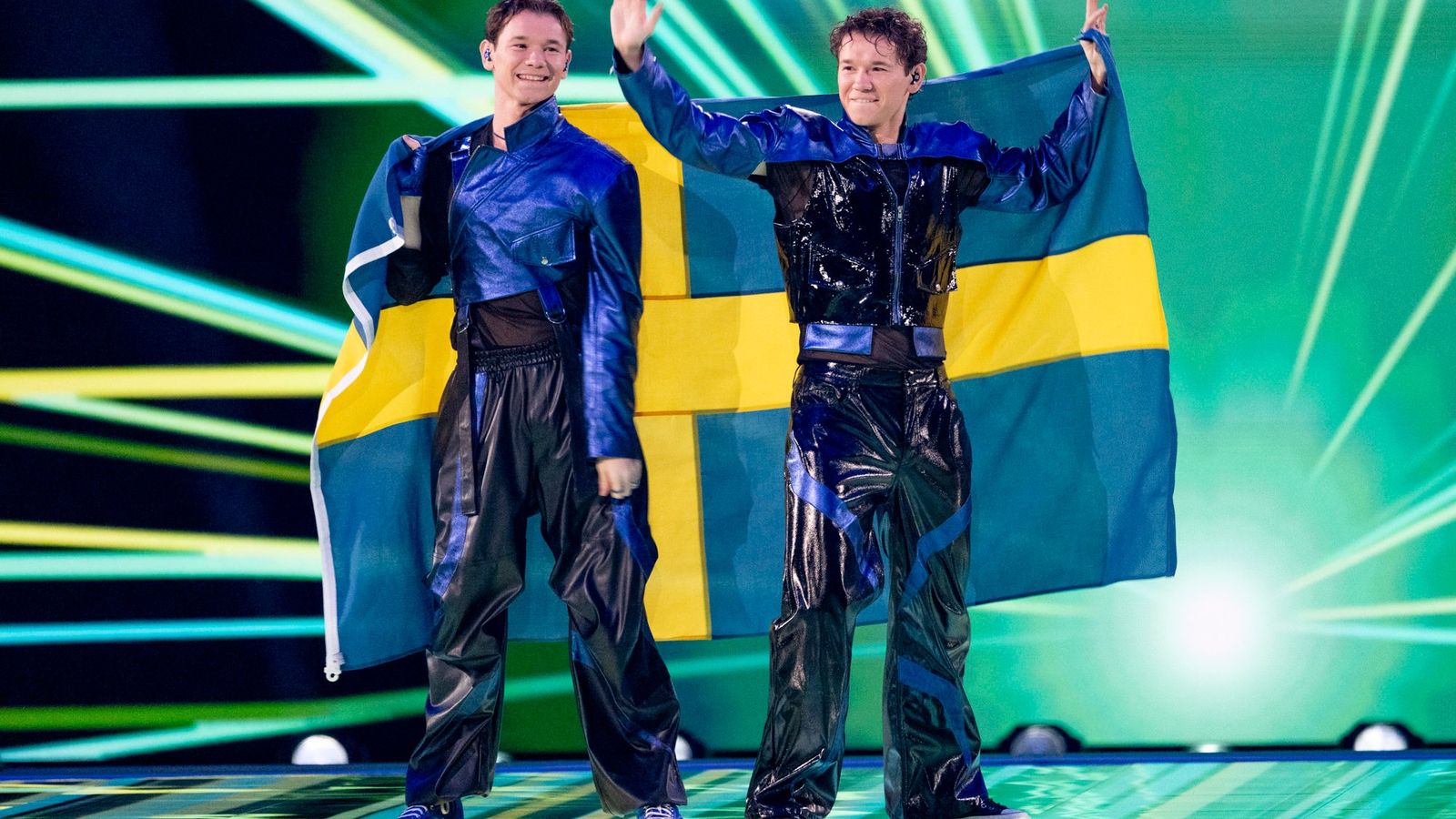
Sweden's Marcus & Martinus walk the Flag Parade at the Grand Final in Malmö Arena
As we wait (just a few weeks!) to find out which city will be hosting the Eurovision Song Contest 2025, we run through some Host City stats of Contests past.
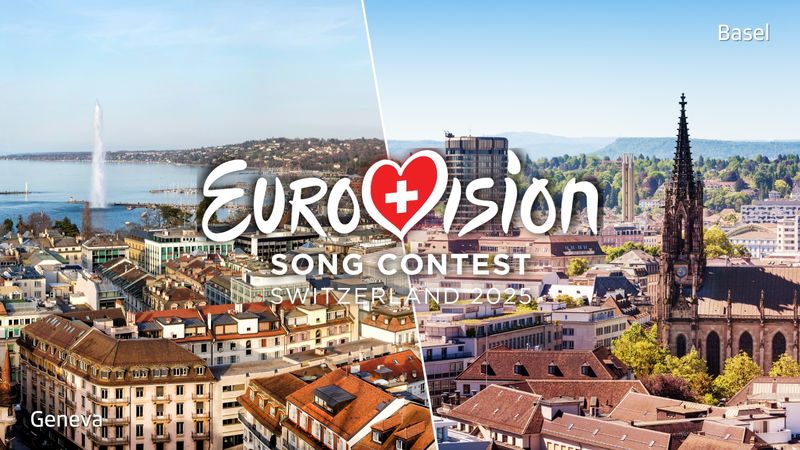
On Friday 19 July, Swiss broadcaster SRG revealed that Basel and Geneva were the two remaining candidates in the running to become the Host City of the 69th Eurovision Song Contest. So there's not long to go before we find out where we're travelling to next May.
With neither of those two destinations having hosted a Contest before, it means that the chosen champ (which will be announced in late August) will become the 46th metropolis to enter the Eurovision history books as a Host City.
It's a rich history of locations that has taken us all over Europe throughout the past 68 Contests. You can peruse the full list of Host Cities down through the years right here .
It was another Swiss city, Lugano, that became the very first Host City of the Eurovision Song Contest in 1956. And since then, the Contest has travelled as far north as Bergen in Norway, as far east as Baku in Azerbaijan, as far south as Jerusalem in Israel and as far west as Lisbon in Portugal.
Racking up the air miles (on Scooch airways, naturally), the longest distance we’ve ever travelled from one year to another is when Netta’s win with Toy took us over 4,000 kilometres from Lisbon in 2018 to Tel Aviv in 2019; a far cry from the one-hour flights, or indeed the train journeys, that would have gotten us around those first few Eurovision Song Contests in the early years.
The shortest distance we’ve had to travel between Contests is when Emmelie de Forest scored victory with Only Teardrops in Malmö in 2013, taking us just 28 kilometres over the Øresund bridge to Copenhagen the following year.
This is of course not counting the effects of the Irish takeover of the scoreboard in the ‘90s, that saw us stay in Dublin two years in a row between 1994 and 1995. And in that instance, we didn’t even need to leave the venue year on year.
The Point Theatre served us well that decade, hosting us in 1994, 1995 and 1997. That puts the Point Theatre right at the top of the league table of venues that have hosted the Eurovision Song Contest the most.
The Emerald Isle’s capital, Dublin, sits at the top of another Eurovision league table - it’s the city which has hosted the Contest the most times. As well as the three that came to us from the Point Theatre, Dublin has brought us a further three Eurovision Song Contests, in 1971, 1981 and 1988.
Next down in the league table of Host Cities are London and Luxembourg City, which have each invited us along to the Contest on 4 occasions, followed by Stockholm (3), Malmö (3) and Copenhagen (3).
It’s not always a capital city that gets to host the Eurovision Song Contest. 23 European capitals have had the honour of being Host Cities, which is just half of the 46 cities that will have played the role by the time Switzerland 2025 comes around.
The current run of the 6 most recent Contests is the longest streak we’ve had where a capital city hasn’t been chosen to host the Contest. Instead, we've had Tel Aviv, Rotterdam, Turin, Liverpool, Malmö and now either Basel or Geneva step up.
This record streak was previously held by the first four editions of the Eurovision Song Contest, between 1956 and 1959.

It was back in 1958 that the tradition of the winning country hosting the following year’s Eurovision Song Contest first came about. Since then, that’s almost always been the case. On some occasions however, a participating broadcaster has declined to host following a victory.
In these instances, it’s the United Kingdom’s BBC that has stepped in to host on a country’s behalf the most number of times.
As well as hosting the Eurovision Song Contest 4 times based on its 5 victories (its 1969 victory was tied with three other countries, with the Netherlands ultimately hosting the following year in 1970), the United Kingdom has also hosted the Contest 5 more times, most recently in 2023 on behalf of Ukraine.
With a generous total 9 hostings, this puts the United Kingdom right at the top of the league table of countries to have brought us the Contest the most times, with Edinburgh, Brighton, Harrogate, Birmingham and Liverpool all being given one opportunity apiece, alongside London’s 4 showings.
The smallest Host City in Eurovision history isn't a city at all, but a town of what was around 1,500 people back when the Contest came to town.
Millstreet, in the south of Ireland, remains the smallest place to have been awarded Host City status; a record that's perhaps unlikely to be broken any time soon. It was the The Green Glens Arena within the town that served as the venue, ultimately seating 3,500 spectators for the 1993 Contest.
And let's hand over our unofficial aviation mascots Scooch for the final word... European destinations aplenty were mentioned in their Eurovision Song Contest 2007 hit Flying The Flag . But just how many of them have actually been Eurovision Host Cities in the past?
London to Berlin
All the way from Paris to Tallinn
Helsinki onto Prague
Don't matter where we are, yeah yeah yeah
Flying high in Amsterdam
Why don't you catch us if you can?
If you guessed Prague, well you're right!
But if you also guessed Berlin, then you deserve an even heartier pat on the back. While Germany has hosted the Eurovision Song Contest three times, it's never been in the German capital.
Frankfurt Am Main hosted the second Contest in 1957, while Munich hosted in 1983 following Germany's win the year before. Düsseldorf then hosted in 2011, following Germany's second win in 2010, with Satellite by Lena.



_kbjlrum-fill_size%3d832x1040-focal_point%3d696x732-focal_size%3d1015x1125-fill_size%3d832x1040-focal_point%3d696x732-focal_size%3d1015x1125.jpg)